
Information
Information responsibility
Here you will find a summary of the requirements for information responsibility – what applies to El-Kretsen as a producer responsibility organisation, what applies to you as a producer, and where you can find the information you need.
El-Kretsen provides information in several ways – including in cooperation with municipalities and through our websites and social media channels. The content is continuously updated so that, as a producer, you always have access to current and relevant guidance.
El-Kretsen operates in accordance with the regulation on electrical equipment (SFS 2022:1276) and the regulation on batteries (EU 2023/1542), which entail extended information obligations for producer responsibility organisations (PROs), municipalities, producers, retailers and authorities.
The information requirements in the various pieces of legislation largely overlap to an extent. Below, we have chosen to go through, in order, the paragraphs and articles concerning the obligation to provide information regarding electrical equipment, followed by the obligation to provide information regarding batteries.
The following information should be made available by producer responsibility organisations
§ 65 On its website, an approved producer responsibility organisation should make available information stating the following:
1. Who owns the producer responsibility organisation
You will find our owners listed on the web page About El-Kretsen – Our Owners.
2. Which producers have made use of the producer responsibility organisation
A list of our affiliated producers of WEEE and/or Batteries can be found on the page Affiliated Companies. This list is automatically updated to make sure the information is correct.
3. How the compensation charged to each producer is calculated, stating either the amount in SEK per electrical item sold, or the number of kilograms of electrical equipment placed on the Swedish market
Information on the basic annual fees can be found on the web page Fees and Charges together with an account of the environmental fees. The environmental fees have been split up and coded separately in order to achieve a fee that is fair in relation to the actual costs incurred by different product groups (based on the costs of collection, transport and recycling). Affiliated companies will find the price list in its entirety on the Declaration Portal.
4. The basis on which the producer responsibility organisation selects its waste-handling subcontractors
WEEE is divided into different fractions depending on the different processes used for collection, transport and recycling. Our subcontractors are selected using parameters such as the most efficient logistics with respect to geographical spread; quality and certification; and the need for specialised processes. The requirements we have of those who handle the collected materials are that the WEEE is handled in accordance with the European standards WEEELabex or Cenelec; that all flows are reported using the reporting tool Reptool; and that all our partners adhere to the CECED (European Committee of Domestic Equipment Manufacturers) code of conduct. You can read more about this in our Sustainability Report.
5. How the operations of the producer responsibility organisation contribute to reaching the recycling targets mentioned in §§ 24-27
Descriptions of the extent to which we reach the recycling targets and how we work with recycling can be found in the Sustainability Report in the section “Focus and results”. We strive to reach the recycling targets by placing requirements on our subcontractors and maintaining an ongoing dialogue.
§ 66 An approved producer responsibility organisation should take measures to inform WEEE owners of the following:
1. The advantages of reusing EEE or taking alternative waste-reducing measures
The section Reuse and Recycling on our website includes a description of different reuse cycles. Here, we also state that at El-Kretsen, we would like our recycling vessels to only contain products that are really at the end of their useful lives. The website www.sopor.nu contains information on reuse and how to prevent waste creation. The best waste prevention is that which takes place before an item reaches El-Kretsen’s collections. For this reason, we have revised our agreements with Swedish municipalities and now require that municipal collection points actively promote EEE reuse including developing suitable ways to achieve this goal.
2. The obligation to keep WEEE separate from other kinds of waste, and & 3. The reason for keeping WEEE separate from other kinds of waste
Swedish municipalities are in charge of collecting consumer WEEE. They are also responsible for informing residents of their obligation to sort WEEE and other hazardous waste separately from general waste products. This is motivated by an explanation that both batteries and electrical and electronic products (EEE) may contain hazardous substances which must be handled separately. More information on WEEE can be found on El-Kretsen’s different media channels and on www.sopor.nu.
4. Where households can deposit their WEEE
The municipalities will provide general advice as well as the addresses to specific collection points where different kinds of WEEE can be deposited locally. The website www.sopor.nu is preparing to launch a new search function for recycling collection points. With time, this will also be stretched to include recycling centres.
5. The possibilities available for recycling WEEE and what positive impact this will have on the environment
El-Kretsen’s Sustainability Report includes information on how much WEEE has been collected and how it has been treated and recovered (broken down by category). Our website with information for the public, called “Kunskapsrummet”, (The Sustainability Library) also features product studies and more in-depth articles on rare metals, plastics and other subjects (in Swedish only).
6. How a producer responsibility organisation can make sure that both the collection and treatment of WEEE is handled in a safe way – including the aspect of any personal information that may be stored locally in discarded electronics
El-Kretsen works actively to ensure quality as well as secure handling of personal data. We use tools like the environmental management systems ISO 14001 and 9001; regular reporting of inconsistencies; and agreements, requirements and follow-up reporting on all our subcontracted collectors, transporters, pre-treatment facilities and recycling facilities. El-Kretsen’s carriers (crates and cages) all have ID tags to make sure that no collected WEEE is shipped off illegally. All items placed in El-Kretsen’s collection vessels are classed as waste and will be forwarded for recycling. The electronics (including mobile phones) picked up at El-Kretsen’s many collection points are transported straight to the pre-treatment subcontractors. There, the products are taken apart and sorted into different fractions such as plastic, metals, components, etc. All kinds of memory functions such as memory cards, hard disks, etc, are fragmented or the data is deleted using quality-assured tools to guarantee the successful removal of all information.
7. The importance of reducing littering
In addition to our co-operation project with Swedish municipalities, El-Kretsen also spreads information in other ways and through other channels such as the information website www.sopor.nu (see the section below).
Information that a producer and a producer responsibility organisation must make available under EU 2023/1542:
Artikel 74: 1a
Information to end-users in contributing to waste prevention. For example how to extend the service life of batteries, and the possibilities of re-use, preparation for re-use, repurposing and remanufacturing.
Provide on the packaging, product sheet and, for example, the website, recommendations for the optimal use of batteries. Can the batteries be reused in their entirety? Describe this and give recommendations on where such end-of-life batteries can be returned.
Artikel 74: 1b
Information of the end-users’ role in contributing to the separate collection of waste.
The municipality is responsible for collecting consumer e-waste and must inform about the obligation to keep e-waste and other hazardous waste separate from other waste. The municipality explains this by pointing out that electrical products, batteries and other types of hazardous waste may contain substances that are harmful to humans and the environment and must therefore be handled separately. Information about e-waste is also available through El-Kretsen’s channels and on sopor.nu.
Artikel 74: 1c
Information on separate collection, take-back and collection points, preparation for re-use, preparation for repurposing and treatment available for waste batteries.
The municipalities provide guidance and addresses for where different types of waste can be deposited within the municipality. At sopor.nu, there is a search function to find recycling stations with battery drop-off points. Batteries can also be returned at the point of sale. For EV and industrial batteries, collection is adapted to where the waste arises. Here there is a description of how batteries are collected and prepared for recycling.
Artikel 74: 1d
Necessary safety instructions to handle waste batteries, including in relation to the risks associated with, and the handling of, batteries containing lithium.
Safety instructions are provided on packaging or product data sheets and similar documents. More general information about the fire risk of lithium is available on El-Kretsen’s website.
Artikel 74: 1e
Information on the meaning of the labels and symbols on batteries.
Batteries must be marked with the crossed-out wheeled bin symbol. All batteries containing more than 0.002% cadmium or more than 0.004% lead must be marked with the chemical symbol of the relevant metal: Cd or Pb. Additional rules on labelling will be introduced in 2026 and 2027. See further in EU 2023/1542 Article 13.
Artikel 74. 1f
Information on the impact of substances, in particular hazardous substances, present in batteries on the environment and on human health or the safety of persons, including the impact due to inappropriate discarding of waste batteries, such as littering or discarding as unsorted municipal waste.
Information must be made available for each battery model placed on the market at retail outlets and/or online platforms. El-Kretsen, as a PRO, provides information via el-kretsen.se and sopor.nu, as well as through specially developed educational material for preschools and schools.
Artikel 74: 4
Distributors that supply batteries to end-users shall permanently provide in their retail premises in an easily accessible and clearly visible manner for the end-users of the batteries, the information referred to in paragraphs 1 and 2, and information on how the end-users may return waste batteries free of charge to the respective collection points established at retail outlets or on behalf of an online platform. That obligation shall be limited to the categories of batteries which the distributor or retailer has, or had, as new batteries in its offer.
See headline.
Artikel 74: 5 och Artikel 74: 6
Artikel 74: 5. The costs covered by the producer under Article 56(4), points (a) to (d), shall be shown separately to the end-user at the point of sale of a new battery. Artikel 74: 6. Producers of the relevant category of batteries or producer responsibility organisations shall conduct awareness campaigns and offer incentives to encourage end-users to discard waste batteries in a manner that is in line with the information made available to end-users regarding the prevention and management of waste batteries in accordance with paragraph 1.
El-Kretsen works with continuous information and motivation through social media, specially developed school material in collaboration with Natur & miljöboken and Bamse. Information is also available on El-Kretsen’s Kunskapsrummet.se and the waste management site sopor.nu. In cooperation with similar European organisations, an annual campaign is carried out – International E-Waste Day – where information on batteries is also included.
According to Regulation 2025:813 with supplementary provisions to EU Regulation 2023/1542, 24 § states:
1. The parties that own the producer responsibility organisation
2. The producers that have engaged the producer responsibility organisation
3. How the fee that a producer must pay to the producer responsibility organisation is calculated, expressed in Swedish kronor (SEK) per battery that the producer has placed on the Swedish market
Information on how the fee is calculated can be found here:
4. The grounds on which the producer responsibility organisation chooses to engage other parties to handle waste batteries
More about El-Kretsen’s work for the safe management of batteries and e-waste can be found here.
According to Regulation 2025:813 with supplementary provisions to EU Regulation 2023/1542, 25 § states:
1. Which facilities for reuse and preparation for reuse are available
On El-Kretsen’s website, you can find information about the suppliers we cooperate with: Our suppliers
2. The importance of reducing littering
El-Kretsen works continuously with information and motivation through social media, specially developed school material in collaboration with Natur & miljöboken and Bamse. Information is also available on El-Kretsen’s website Kunskapsrummet.se and the waste management site sopor.nu. In cooperation with similar European organisations, an annual campaign is carried out – International E-Waste Day – where information on batteries is also included.
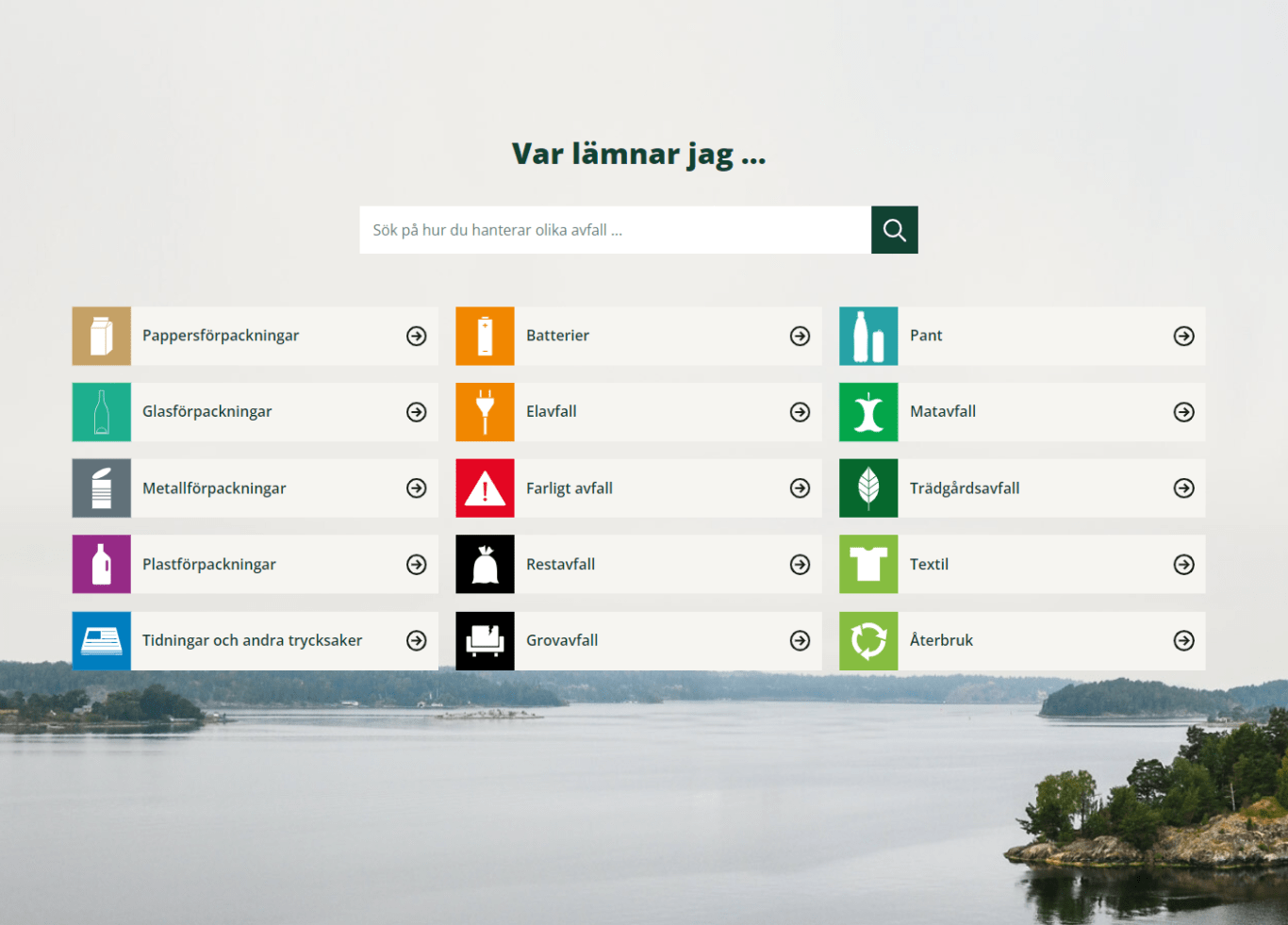

In addition to cooperating with the municipalities, El-Kretsen carries out further information initiatives:
- On our own website and in our newsletters.
- Our website Kunskapsrummet.se (The Sustainability Library), is a public info hub channel for motivating and informing people about WEEE and sustainability (in Swedish).
- Bamse comic books: We publish and distribute classroom sets of a special edition of the Swedish comic Bamse (in Swedish only). It focuses on batteries and is aimed at children aged 5-9. To order it, please visit Kunskapsrummet, here.
- On social media: On LinkedIn we target companies, and to reach the wider public we use TikTok and YouTube where you’ll find us under “El-Kretsen informerar”.
Our YouTube channel has been divided into different sections. There are tutorial films for recycling centre employees and others who work for El-Kretsen as well as information campaigns aimed at the general public (on International E-Waste Day, for example).
The reason for using TikTok is to be able to reach and motivate coming generations (in Swedish only). - To reach school children aged 10-12, El-Kretsen has an on-going collaboration with Natur & Miljöboken (“A Book on Nature and the Environment”), which comes in three parts. Every year, this trilogy reaches some 500,000 children and the third book contains a chapter on WEEE and the circular economy (in Swedish only).
- El-Kretsen is also involved in providing information for the website www.sopor.nu. The major advantage of this website is that here people can find all the available information on all kinds of waste in one and the same place.
The information a producer has to make available
§ 76 A producer should motivate owners of WEEE to sort and handle their WEEE separately from other kinds of waste
Ways for producers to make this information available may be on their websites or in their annual reports, referring to El-Kretsen as the source of such information.
§ 79 A producer who places new kinds of electrical or electronic equipment on the European Union market must be sure to provide information on the following:
The components and the materials that make up the equipment as well as where in the equipment users can expect to find hazardous substances. The producer must also provide the information necessary for the equipment to be handled and treated in a way that is acceptable with respect to health and the environment.
Within one year of placing this equipment on the market, the above information must be made available free of charge to those who treat WEEE. The information should be made available in the form of manuals or through electronic media.
§ 80 On their website, a producer must make information available on how they contribute towards reaching the recycling targets mentioned in §§ 24-27.
If the producer is an affiliated member of a producer responsibility organisation such as El-Kretsen, they do not need to make this information available on their website.
§ 81 A producer who provides electrical equipment other than household consumer goods must make sure that:
Information equivalent to the information mentioned in § 86 (points 1-5, see below) is made available to users that are not private households.
1. the meaning of the labelling referred to in § 38, (the crossed-out wheelie bin),
2. the obligation to sort and handle WEEE separately from other kinds of waste,
3. the reason for handling WEEE separately from other kinds of waste,
4. the importance of handling electrical equipment and WEEE in an appropriate manner with respect to the effect hazardous substances can have on people’s health and the environment,
5. the importance of reducing littering,
This information should be presented and made available in such a way that it is easily understood and reaches anyone who can be assumed to want to deposit WEEE through a producer.
§ 82 A producer who produces electrical equipment containing batteries…
…and which is covered by the requirement in § 35 must make sure that the electrical equipment is accompanied by a manual showing what kind of battery is fitted inside the equipment and how it can be safely removed.
The regulations do not state whether such a manual must be provided in printed form or if referring to or linking to, for example, a QR code on the product is considered an acceptable alternative.
§ 83 A producer must state how personal information stored locally in electrical equipment can be erased and how the equipment can be restored to factory settings.
This information should be presented and made available in such a way that it is easily understood and reaches anyone who can be assumed to want to deposit WEEE through a producer or a producer responsibility organisation.
This information may be provided in digital format and should be made available on producer websites and/or locally as information posted at collection points.